
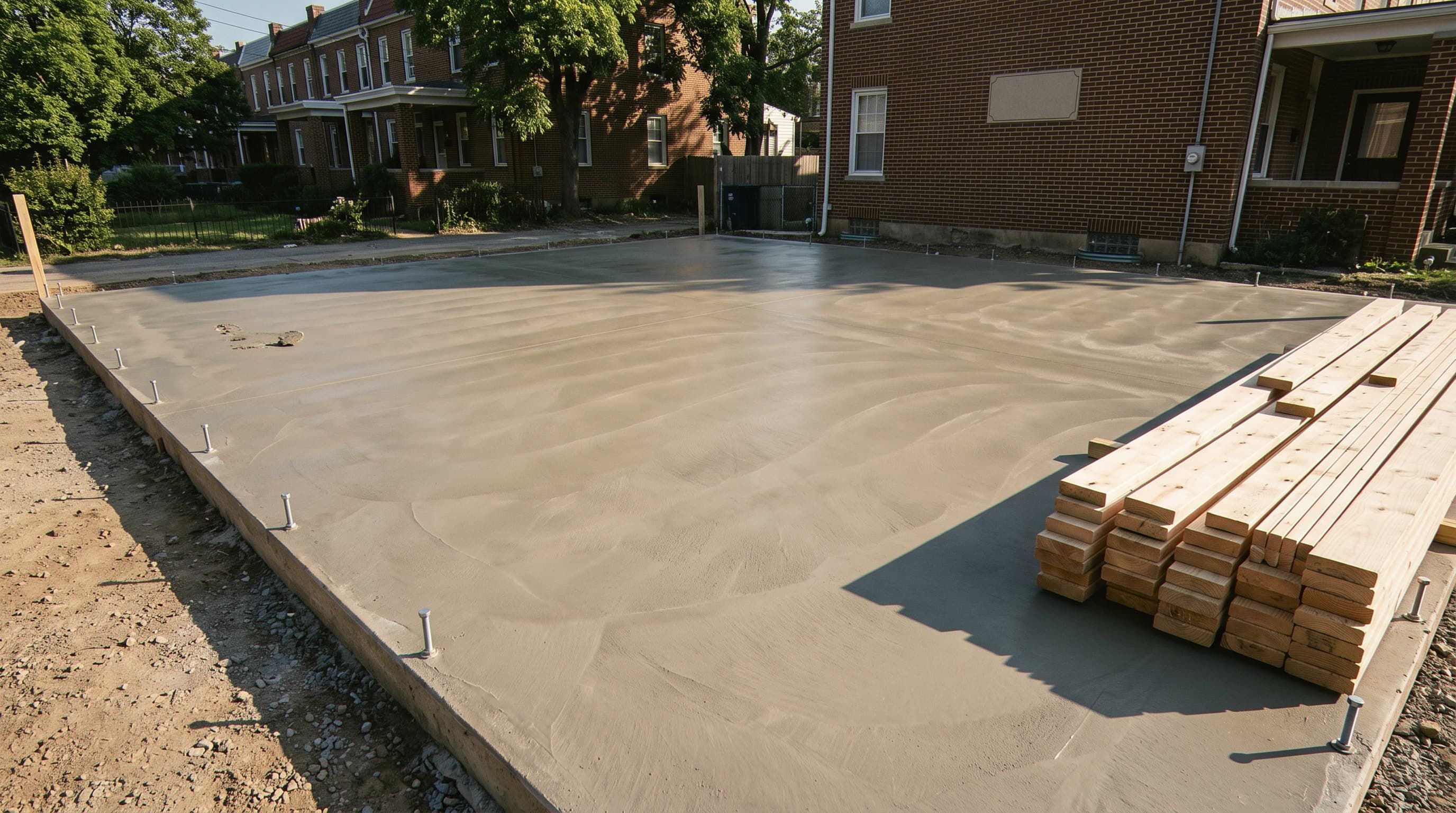
Foundation and Slab Work Built to Last in Washington
A slab is only as good as the ground beneath it. That is where our crew starts on every single job. We dig down to firm soil, set the depth for our local frost line, and build a compacted stone base before any concrete gets poured. The clay heavy soil around Washington holds water and shifts with the seasons. That matters more than most people think. When a slab sits on loose fill or weak grading, it cracks and settles fast. So we take the time to level the site, add drainage, and lay a vapor barrier that keeps ground moisture from wicking up. Then we set steel rebar or wire mesh to tie the whole pour together. Rain in the forecast changes our timing, and we plan the pour around it. Every step happens in order, gets checked, and is poured to the right thickness for the load it will carry.
We handle the full range of foundation and slab work across the District. That covers garage floors, shed and workshop pads, patios that need a structural base, room additions, and porch footings. Say you are adding on to a row home in Capitol Hill or pouring a fresh pad in a Petworth back yard. The prep is what makes it hold. We form clean edges, keep the slab dead level, and cut control joints so the concrete cracks where we plan and not where it shows. For deeper footings we pour below the frost depth, so a hard winter freeze will not heave the structure and open gaps. We size every footing to the wall or column that lands on it. Older lots in the District often hide old fill, buried debris, or soft spots, and we deal with those before we form up. You get one crew from the first layout line to the final finish.
- Compacted stone base and true grading under every pour, so the slab rests on ground that will not shift, settle, or wash out from under it.
- Footings dug below the local frost depth to keep winter freezing and thawing from lifting or splitting the concrete over the years.
- Steel rebar or wire mesh set in place to tie the slab together and hold it flat under the real weight it has to carry.
- Control joints cut on a plan, so any hairline crack lands inside a joint and not across the open floor where you would see it.
- A vapor barrier and drainage layer that keep standing water and damp soil moisture from working up through the finished slab.
Getting a foundation right the first time saves you far more than the pour itself. A slab that settles pulls at everything above it. Doors start to stick. Tile lifts, grout fails, and cracks open in the walls. We size the footing to the weight it holds, whether that is a simple garden shed or a two story addition over a full basement. Our crew works clean, keeps the site safe, and walks you through what we found in the ground before a single yard of concrete goes down. When the job wraps, you get a flat, solid base you can build on and then stop worrying about for good.
Planning a new slab, addition, or footing in Washington, DC? Call our crew and tell us what you are building. We will look at the site, talk through the ground and the drainage, and give you a clear, honest plan to get it poured right.