
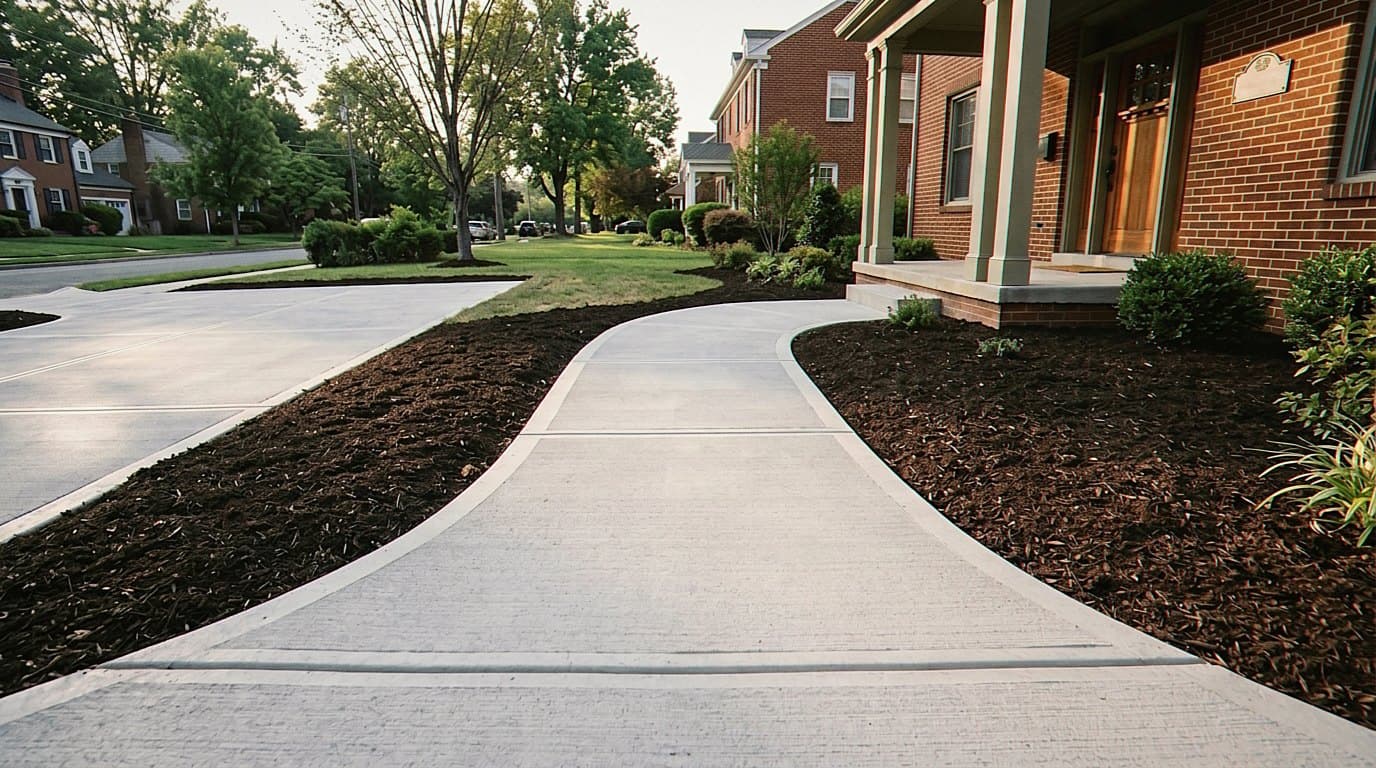
Sidewalks & Walkways · Washington

Concrete Sidewalks and Walkways in Washington, DC

Smooth, level walking surfaces poured by our own Washington crew, from the front steps to the public sidewalk out front.

Free Sidewalks & Walkways quote.

Tell us about the job. We reply within one business hour.

Your information is kept private. No spam, ever.

What we install

Walkways built to hold up to DC weather and daily foot traffic

A good walkway does one quiet job. It gets people from the street to your door without a stumble. We pour concrete sidewalks and front walks across Washington, DC, and we handle the whole job with our own crew. That means the person who measures your grade is on the same team that finishes the surface. When a slab lifts, cracks, or holds water after every rain, we come out, look at what is actually happening under it, and pour a path that sits flat and drains the way it should.

Washington puts real stress on a walkway. Summers here run hot and humid, winters bring freezing nights, and the ground moves as water freezes and thaws under the slab. Add road salt, tree roots from all those mature street trees, and years of foot traffic, and an old walk starts to heave and split. We form and pour each path with the right base, the right thickness, and control joints in the right spots so the concrete can move a little without tearing itself apart. Rock Creek runoff and clay heavy soil both get factored in before we place a single yard.

  • One local crew forms, pours, and finishes your walk from start to finish
  • Proper gravel base and slope so water runs off instead of pooling
  • Control joints placed to guide cracks and keep the surface even
  • Slip resistant broom or float finish for wet DC mornings
  • Grades and widths that keep the path easy and safe to walk
We pour the path, finish it by hand, and pick up the phone when you have a question.

Most of our sidewalk work in the District falls into a few buckets. Some folks want a fresh front walk to replace a cracked, tilted one that trips guests. Others need the public sidewalk out front repaired after root damage or settling. A lot of row house owners on Capitol Hill and in Shaw want a clean path from the sidewalk gate back to the stoop. We do all of it. Where the work sits in public space, the strip between your property line and the curb, DDOT requires a public space permit, and we handle that step so your job stays clean with the District.

If your front walk is cracked, uneven, or holding water, we can take a look and tell you straight what it needs. Call us and tell us what is going on at your place in Washington. We will set a time, measure the space, and walk you through how we would pour it. No pressure, just a clear plan and a crew that shows up.

Materials

What we pour your walkway with

Most residential walks in Washington are poured concrete, and for good reason. It holds a flat, even surface, it takes a slip resistant finish, and it stands up to freezing nights and hot summers better than most alternatives. We set a compacted gravel base under every pour so the slab has something solid and free draining to rest on. On wider or public walks we add steel or fiber reinforcement to help the concrete carry load and resist cracking as the ground shifts.

You still have choices in how the surface looks and feels. A plain broom finish gives you the most grip for wet mornings and the lowest cost to keep up. A smoother float finish reads cleaner near a modern row house front. If you want the path to match brick or stone common in Georgetown and Capitol Hill, we can stamp or tint the concrete so it echoes that look without the loose joints and weeds a paver walk can bring. We talk through the options at the estimate so the finish fits your block.

  • Compacted gravel base under every slab for drainage and support
  • Steel or fiber reinforcement on wider and public walks
  • Broom, float, or stamped finishes to match your home
  • Control joints cut at planned spacing to manage cracking
What about the alternatives?

Walkway surfaces compared for DC homes

Here is how the common walkway options stack up for a Washington property, based on how they handle our weather and how much upkeep they ask for.

Poured concrete

Level, low upkeep, and strong against freezing and thawing. The surface we recommend for most DC walks.

Recommended

Stamped concrete

The same solid slab with a brick or stone pattern pressed in. A clean fit for historic blocks, with a little more care to keep the color looking fresh.

Acceptable

Brick or stone pavers

Handsome and traditional for Georgetown style fronts. Over time the joints shift and weeds creep in, so they need resetting now and then.

Acceptable

Crushed gravel path

Cheap and quick to lay, and it drains well. It scatters into the yard, turns soft in heavy rain, and is hard to keep even for daily use.

Acceptable

Asphalt walk

Softens in DC summer heat and needs sealing every few years. It rarely looks right on a residential front walk.

Skip

Loose flagstone on sand

Pretty at first, but the stones rock and tilt as the base settles. That becomes a real trip hazard on a path people use every day.

Skip
How it goes

From quote to walk-on, fast.

1

Free walk-through

A short on-site visit. We look at the job in person and write a fixed quote on paper, not over the phone.

2

Prep the surface

The slow, unglamorous step most shortcuts skip. Done right here so the finish actually holds.

3

Do the work

A local crew runs the job in the order that lasts, with the materials named in the quote.

4

Walk it together

We hand the work back with a final walk-through, so you see exactly what was done and why.

Before you book

Straight answers before you commit

A new walkway is a real project, so here are the questions we hear most from Washington homeowners, answered plainly.

How long does a new sidewalk take to pour?

Most residential walks are formed, poured, and finished in one to two days once we are on site. The concrete needs time to cure after that. You can usually walk on it lightly within a day or two, and we tell you when it is ready for full use. Weather in the District can shift the timing, and we plan the pour around it.

Do I need a permit for sidewalk work in DC?

If the work sits on your private property, usually no permit is needed. If it touches the public sidewalk in the space between your line and the curb, DDOT requires a public space permit. We handle that filing and the inspection so the job is done right with the District and does not come back on you later.

Will the new walk crack like my old one did?

No walkway is fully crack proof, because concrete moves as the ground freezes and thaws. What we control is how it moves. We set a solid base, use the right slab thickness, and cut control joints at planned spacing so any cracking follows the joints instead of wandering across the surface.

Can you match the walkway to my row house front?

We pour a lot of walks on Capitol Hill, in Shaw, and across the older wards where the look matters. We can broom, float, stamp, or tint the concrete so the path suits a brick front or a modern renovation. We bring finish samples to the estimate so you can see the surface before we pour.

What about the tree roots that lifted my old sidewalk?

DC has a lot of mature street trees, and their roots are a common reason walks heave. When we tear out the old slab we deal with the roots we can safely address and build the new base to give the walk room. We keep the tree healthy and the path level as best the site allows.

Do you fix just a section, or the whole walk?

Both. If one panel has settled or cracked and the rest is sound, we can cut it out and pour a fresh section that ties in. If the whole walk is tilting or spalling, a full replacement often costs you less over time than patching it again and again. We tell you honestly which one your walk needs.

Aftercare

Keeping your Washington walkway in good shape

A poured concrete walk asks very little of you, but a few simple habits keep it looking sharp and lasting through many DC winters. The two things that wear a walk fastest here are water and salt. Keep water moving off the surface and go easy on the deicer, and your path will hold up for a long time.

  • Rinse off road salt and deicer in late winter so it does not pit the surface
  • Sweep leaves and dirt off the walk so it does not stain or trap moisture
  • Keep the joints clear so water drains instead of sitting on the slab
  • Ask us about a fresh sealer every few years to guard against freezing damage
  • Trim back roots and edging plants that push against the slab
  • Call us early if a panel starts to tilt, so a small fix stays small
FAQ

Common questions about sidewalks and walkways in Washington

Ready for a quote in Washington?

Send a few photos or book a free on-site walk-through. A fixed written quote within one business day.

CallFree quote